
Chapter one
What is Pokkali rice? A rice that refused to drown
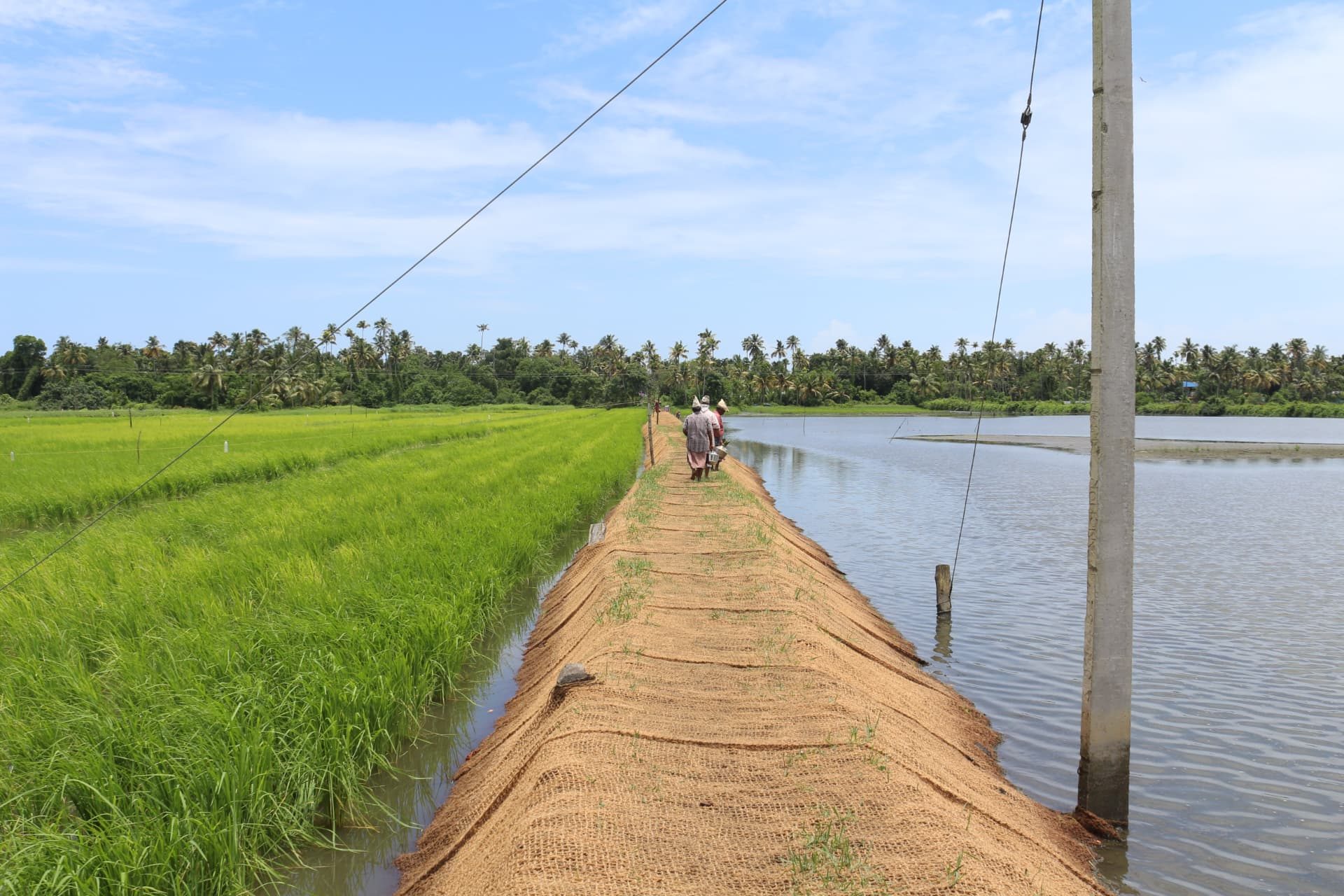
Along the coastal wetlands of central Kerala, where seawater meets the backwaters, most crops fail. Pokkali thrives. Its tall stalks rise above floods and tolerate salt — a gift of generations of careful seed selection by Kerala's farmers.
Chapter two
Mounds, seeds and the monsoon
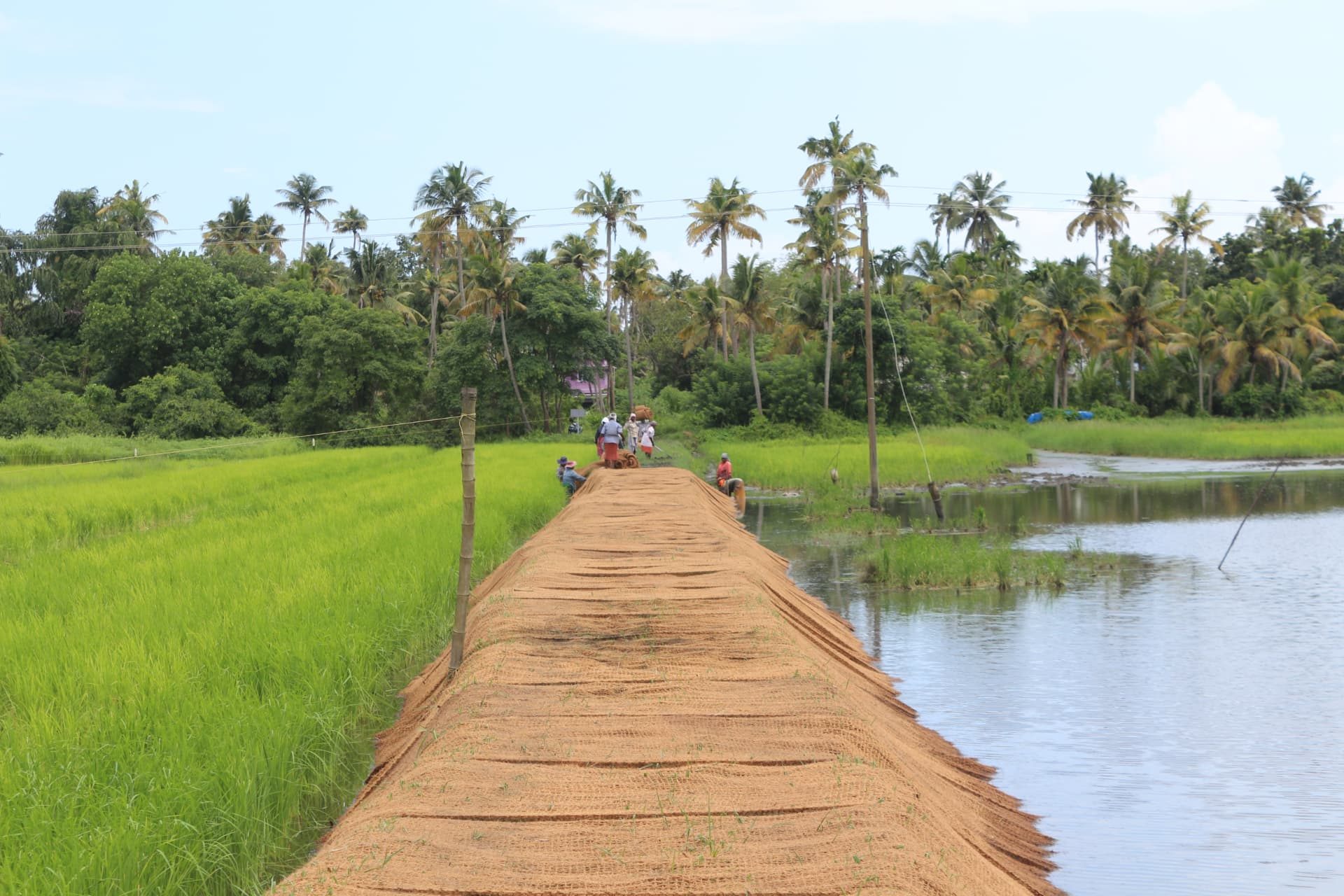
Pokkali cultivation begins when the monsoon rains flush the salt from the fields. It is labour of the hands — no tractors fit on these soft, tidal lands.
- Farmers raise earthen mounds as the rains wash salt away
- Sprouted seeds are sown on the mounds
- Seedlings are spread across the field once strong
Chapter three
The year of a Pokkali field
Apr – May
Preparing the mounds
Fields drained, mounds built, rain awaited.
Jun – Jul
Sowing
Sprouted seeds planted with the monsoon.
Oct – Nov
Harvest
Only the panicles are cut; stalks stay to rot and feed the soil.
Dec – Apr
Prawn season
Tide let in; prawns and fish grow on the stubble.
Chapter four
The tide as a partner
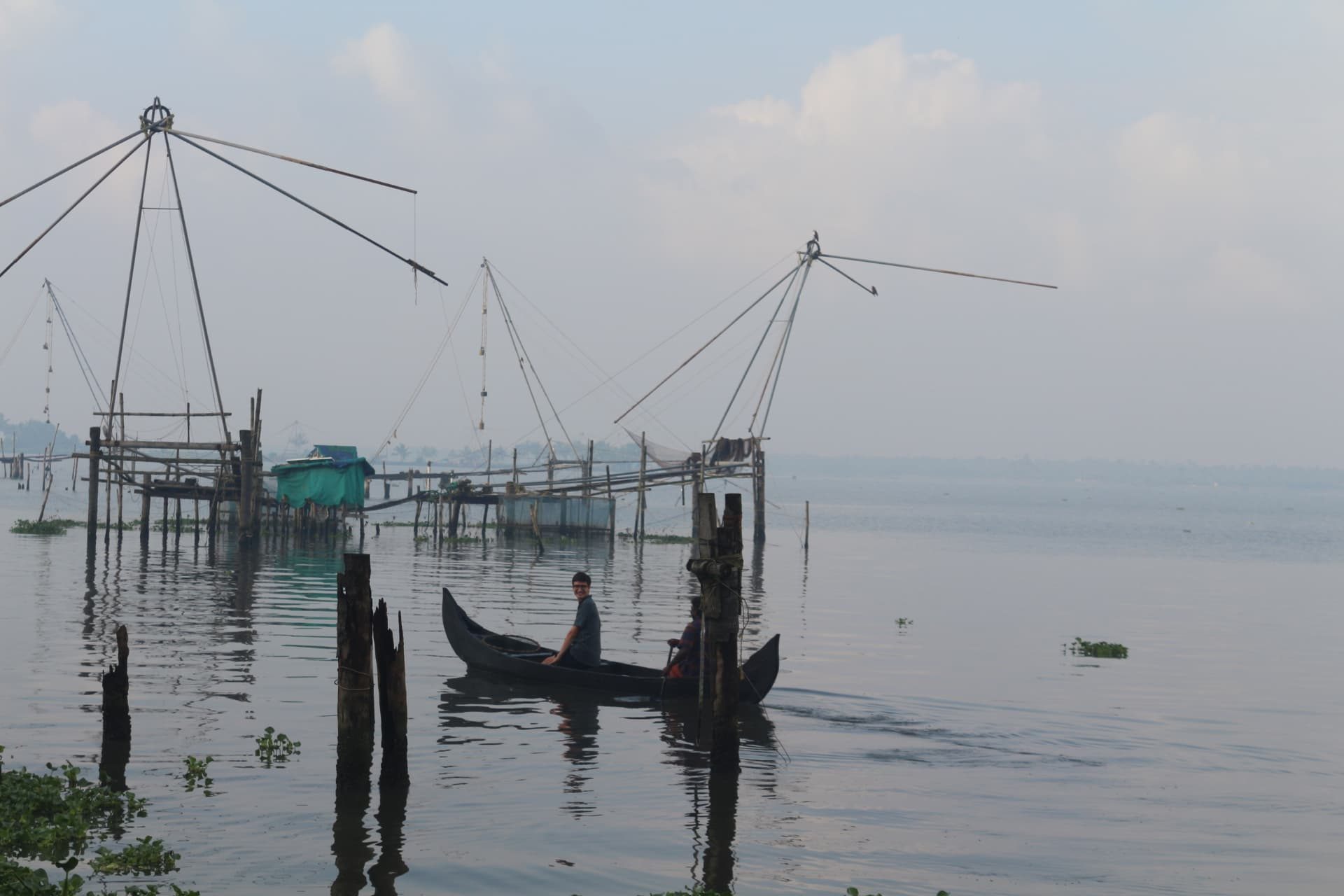
Sluice gates called thoombu are opened and closed with the moon and tide. Young prawns drift in, feed on the decaying rice stalks, and their waste in turn fertilises the next rice crop. It is a circle with nothing wasted.
No chemicals
The field feeds itself — no synthetic fertiliser or pesticide.
Zero waste
Rice feeds prawns, prawns feed rice.
Wetland life
Home to migratory birds, crabs, fish and mangroves.
Climate resilient
Survives floods and rising salinity better than modern varieties.
Natural flood buffer
Wetlands soak up floodwater that would reach homes.
Livelihoods
Supports farming and fishing families together.
“Pokkali is not just a crop. It is how our grandparents made peace with the sea.
Chapter five
Palliyakkal today
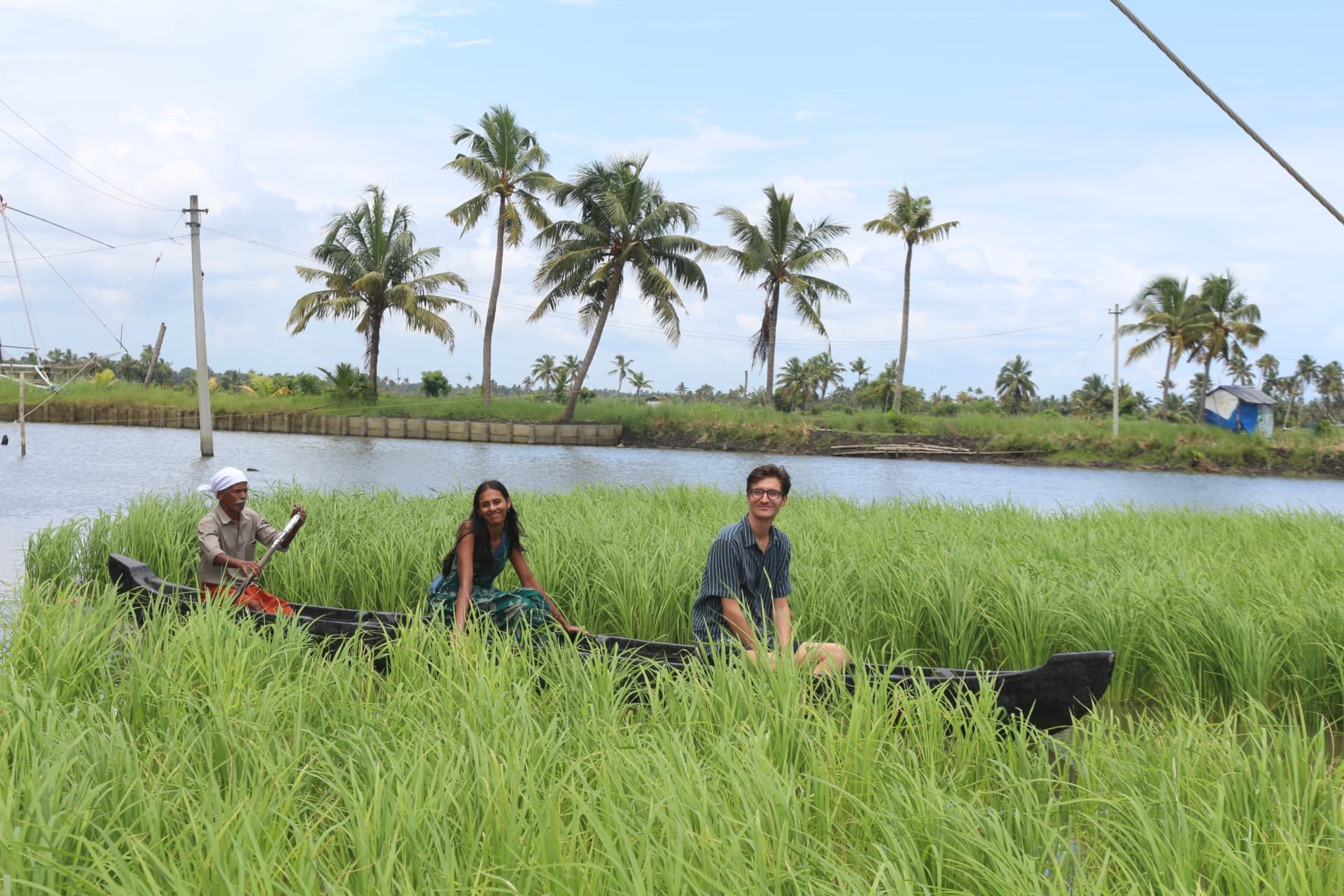
Across Kerala, Pokkali fields have shrunk as labour costs rise and land is converted. In Palliyakkal, farmers, the Service Co-operative Bank and the community are fighting back — reviving fields, creating fair markets, and opening the village to visitors through PAADI Tales.
Every farm tour, every packet of rice, every meal at the Hub helps keep a field alive for another season.
Plan your visit
See the story for yourself on a Pokkali farm tour.